客户看外壳,第一眼看颜色,第二眼问「几年会不会褪」。这两个问题的答案都不在漆的品牌上,而在板子进喷涂线之前——漆是长在表面上的,表面没处理好,再贵的漆也挂不住。
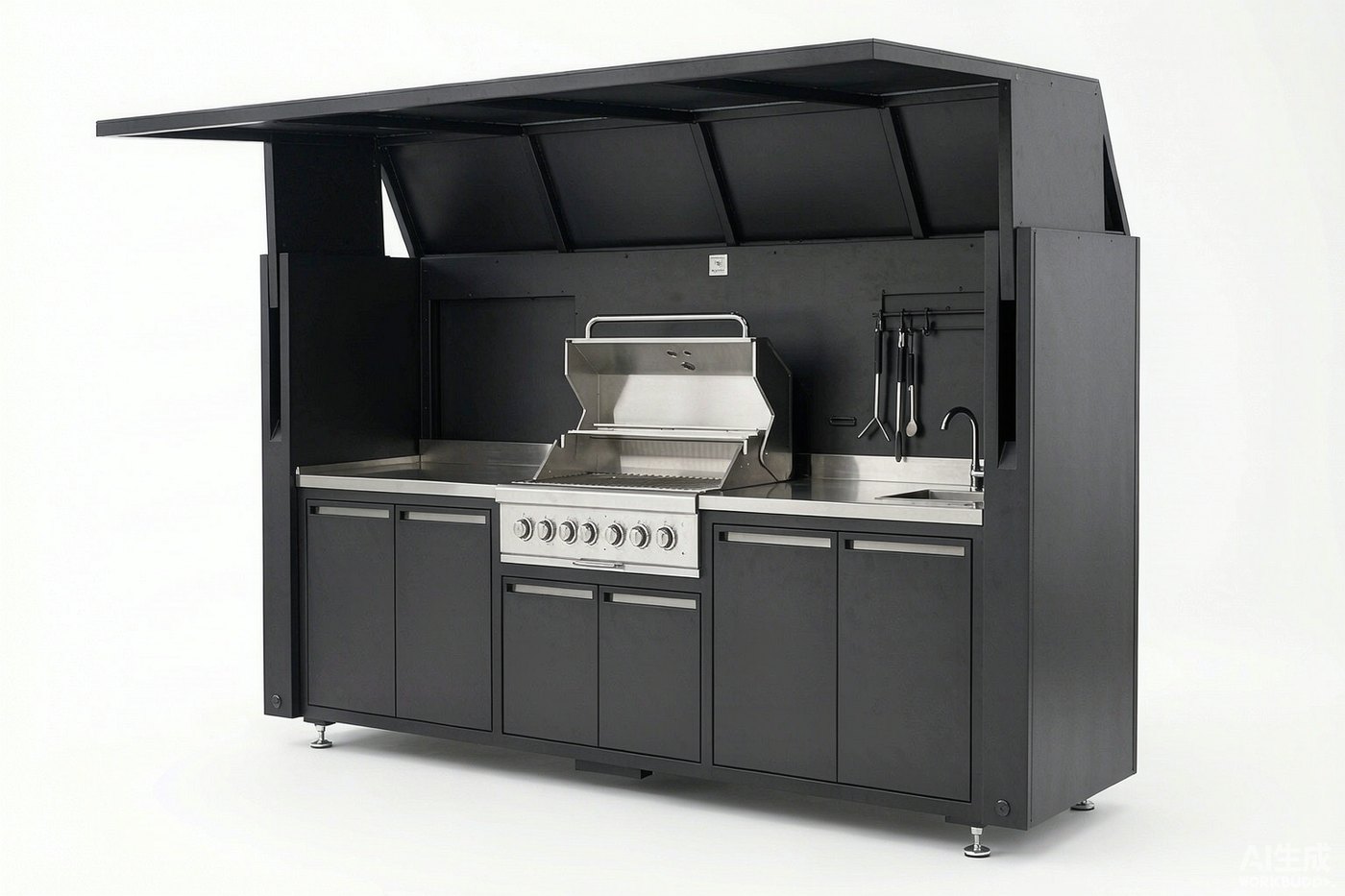
铝板从下料、折弯、焊接到打磨,表面会留下冲压油、手印、氧化皮和细微的焊痕。这些看不见的东西,就是日后起泡、掉漆、边角锈点的起点。所以喷涂前必须先过五道水。
洗掉冲压油与手印。油膜哪怕只有薄薄一层,漆喷上去也是浮在油上的,附着力测试一划就掉。这一段用碱性清洗剂,配合喷淋与浸泡。
去掉铝板表面的氧化皮与轻微锈蚀,让金属本体露出来。酸洗不足,涂层底下就埋着一层疏松的氧化层;酸洗过头,板面会发毛、失光。
这一步最容易被省,也最决定盐雾寿命。钝化让铝表面重新长出一层致密、均匀的氧化膜,它是涂层与金属之间的桥。没有这道膜,水汽会沿着涂层与基材的界面往里走,从边角开始鼓包——这类失效在沿海项目上出现得最早。
用去离子水把酸液与药水残留冲干净。自来水里的钙镁离子留在板面上,进烘箱后水分蒸发,盐分结晶,涂层上就会出现细小的针孔。针孔肉眼几乎看不见,却是水汽进入的通道。
把水分彻底烘掉再上线。带水进烘箱,漆膜会出现针孔与缩孔,也会让前四道水白做。
涂装不是「喷一层就完」。WOOTRY 的外壳走两涂两烤:先喷面漆,流平后进烘箱;再喷罩光漆,流平后再烘一次。两层漆分工不同——面漆管颜色与遮盖,罩光漆管耐候、光泽与抗污。
一涂一烤也能做得很好看,第一年看不出差别。差别在第三年:只有一层漆时,紫外线直接打在色浆上,颜色开始漂移,表面逐渐粉化;多一层罩光漆,紫外线先被它挡掉,色浆保住了。两次烘烤让两层漆各自充分交联,层间结合更牢,边角不容易磕掉。
烘烤之后是自然冷却、贴保护膜、编号入库。保护膜不是装饰,是让外壳在被安装工搬上台面之前不被划伤——膜留着,交付时才撕。
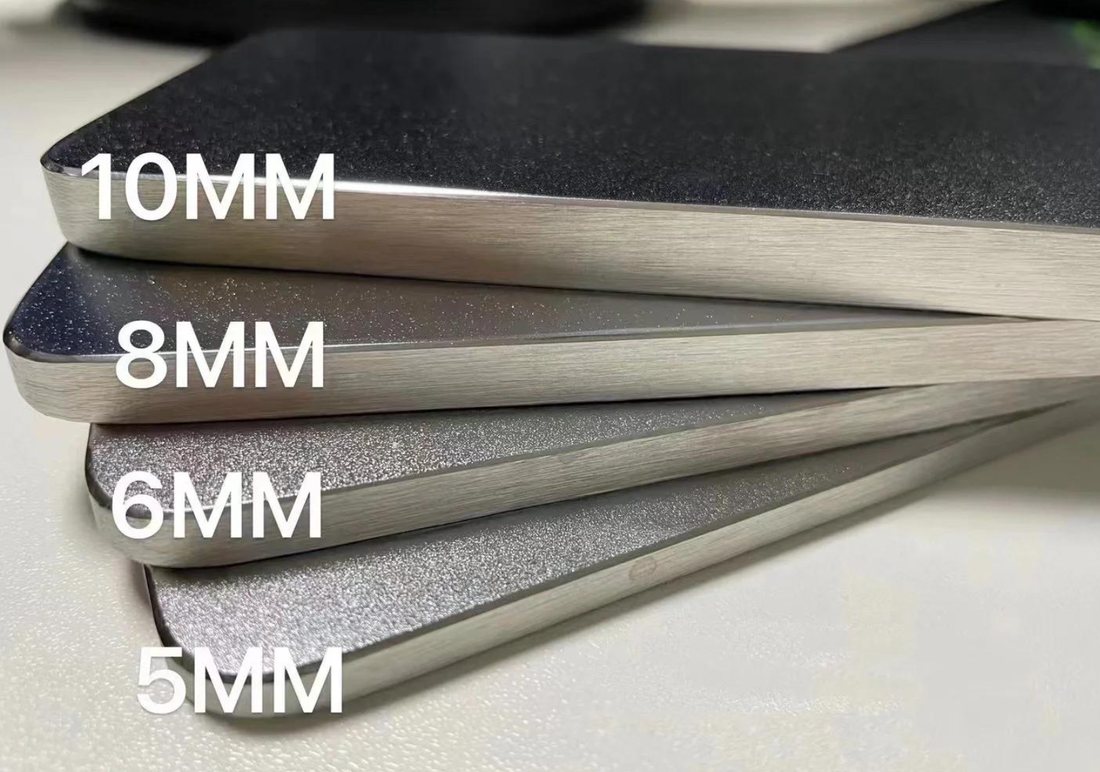
外壳之外,柜体用的是铝蜂窝板:两层铝板夹一层蜂窝铝芯,靠蜂窝的格子把上下两张板撑住。整块板受力均匀,不会像单层薄板那样在日照下鼓、在温差里翘。板材按位置选厚度,跨度大、台面下受力重的地方用厚的,侧板与门板用薄的。
不用仪器也能看出大半,四个动作:
盐雾与紫外的具体时长,按目的国标准与客户要求执行,我们配合提供测试报告,不口头承诺具体小时数。
涂层不是喷上去的一层颜色,是长在金属上的一层结构。前处理做没做,三年后才看得出来。
判断一台户外厨房的涂层靠不靠谱,别只看色卡。问三个问题就够了:前处理有几道水、涂装是几涂几烤、边角与开孔补没补漆。这三个答案,比漆的品牌更能说明五年后它长什么样。
Clients look at a shell and see colour first, then ask how many years before it fades. Neither answer depends on the paint brand — both are decided before the panel ever reaches the coating line. Paint grows on the surface; if the surface is wrong, the most expensive paint will not hold.
From cutting and bending to welding and grinding, a panel collects drawing oil, fingerprints, oxide scale and fine weld marks. Invisible as they are, these are where blistering, peeling and rust at the edges begin. So five baths come before any paint.
Removes drawing oil and fingerprints. Even a thin oil film leaves the paint floating on top — one scratch in an adhesion test and it lifts. Alkaline cleaner, spray and immersion.
Strips oxide scale and light rust so the bare metal is exposed. Too little, and a loose oxide layer sits under the coating; too much, and the surface etches and loses its sheen.
This is the step most often skipped, and the one that decides salt-spray life. Passivation regrows a dense, even oxide film on the aluminium — the bridge between metal and coating. Without it, moisture travels along the interface and lifts the film from the edges inward, the failure that shows up first on coastal projects.
Deionised water flushes out acid and chemical residue. Calcium and magnesium left from tap water crystallise in the oven and leave pinholes in the film — nearly invisible, but a doorway for moisture.
Moisture is driven off before the panel goes on line. Water into the oven means pinholes and craters, and the first four baths wasted.
Coating is not one pass of a spray gun. Our shells go through two coats and two bakes: base coat, flash-off, bake; then clear coat, flash-off, second bake. The layers do different jobs — the base coat carries colour and opacity, the clear coat carries weathering, gloss and easy cleaning.
A single coat and single bake can look perfect on day one. The difference appears in year three: with one layer, UV hits the pigment directly, the colour drifts and the surface starts to chalk. With a clear coat, UV is stopped there first and the pigment survives. Two bakes let each layer cross-link fully, so the bond between them holds and edges resist chipping.
After baking comes air cooling, protective film and numbering into stock. The film is not decoration: it keeps the shell unmarked until the installer lifts it onto the counter — it stays on until handover.
Behind the shell, cabinets are aluminium honeycomb: two aluminium skins around a honeycomb core, the cells holding both faces apart. Load is distributed across the panel, so it does not bulge in sun or warp with temperature swings the way a single thin sheet does. Thickness is chosen by position — heavier under the worktop and across long spans, thinner on side panels and doors.
You do not need instruments for most of it. Four moves:
Salt-spray and UV durations follow the destination standard and the client's specification. We supply test reports and do not promise hour counts verbally.
A coating is not a layer of colour sprayed on; it is a structure grown on the metal. Whether the pre-treatment was done shows up three years later.
Do not judge a coating by the colour card. Three questions are enough: how many water baths in pre-treatment, how many coats and bakes, and whether edges and cut-outs are touched up. Those answers say more about year five than the paint brand does.
El cliente mira un chasis y ve primero el color; después pregunta cuántos años tardará en decolorarse. Ninguna de las dos respuestas depende de la marca de la pintura: ambas se deciden antes de que el panel entre en la línea de lacado. La pintura crece sobre la superficie; si la superficie está mal, la pintura más cara no agarra.
Desde el corte y el plegado hasta la soldadura y el pulido, el panel acumula aceite de estampado, huellas, cascarilla y marcas de soldadura. Invisibles, pero son el punto de partida de ampollas, desprendimientos y óxido en las aristas. Por eso, antes de pintar, pasan cinco baños.
Elimina aceite de estampado y huellas. Basta una película fina de aceite para que la pintura quede flotando: un corte en el ensayo de adherencia y se levanta. Detergente alcalino, aspersión e inmersión.
Retira la cascarilla y el óxido leve para dejar el metal desnudo. Si falta, queda una capa de óxido suelta bajo el lacado; si se pasa, la superficie se pica y pierde brillo.
Es el paso que más se omite y el que decide la vida en niebla salina. El pasivado regenera una película de óxido densa y uniforme: el puente entre metal y lacado. Sin ella, la humedad avanza por la interfaz y levanta la película desde las aristas hacia dentro, el fallo que aparece antes en obra costera.
Agua desionizada para arrastrar ácidos y restos químicos. El calcio y el magnesio del agua de red cristalizan en el horno y dejan poros en la película: casi invisibles, pero una puerta para la humedad.
Se elimina la humedad antes de entrar en línea. Agua en el horno significa poros y cráteres, y los cuatro baños anteriores tirados.
Lacar no es pasar la pistola una vez. Nuestros chasis pasan por dos capas y dos horneados: capa de color, reposo, horneado; después barniz de acabado, reposo y segundo horneado. Cada capa tiene su función: el color aporta tono y cobertura; el barniz aporta resistencia, brillo y limpieza fácil.
Con una sola capa y un solo horneado todo puede verse perfecto el primer día. La diferencia llega al tercer año: con una sola capa, el UV incide directamente sobre el pigmento, el color deriva y la superficie empieza a pulverizarse. Con barniz, el UV se detiene antes y el pigmento se conserva. Dos horneados permiten que cada capa reticule por completo, de modo que la unión entre ambas aguanta y las aristas resisten el golpe.
Tras el horneado vienen el enfriamiento natural, el film protector y la numeración en almacén. El film no es decoración: mantiene el chasis sin marcas hasta que el instalador lo sube a la encimera — se retira en la entrega.
Detrás del chasis, los muebles son de panal de aluminio: dos pieles de aluminio con un núcleo en panal que las mantiene separadas. La carga se reparte por todo el panel, así que no se abomba al sol ni se alabea con los cambios de temperatura como una chapa fina. El espesor se elige por posición: más grueso bajo la encimera y en luces largas, más fino en laterales y puertas.
Para casi todo no hacen falta instrumentos. Cuatro gestos:
Las horas de niebla salina y UV se fijan según la norma del destino y la especificación del cliente. Aportamos informes de ensayo y no prometemos cifras de horas de palabra.
Un lacado no es una capa de color pulverizada: es una estructura que crece sobre el metal. Si se hizo el pretratamiento se ve a los tres años.
No juzgues un acabado por el abanico de colores. Tres preguntas bastan: cuántos baños tiene el pretratamiento, cuántas capas y horneados, y si se retocan aristas y taladros. Esas respuestas dicen más del quinto año que la marca de la pintura.